The key question that the Communists had to answer in order to sustain their power, just as the Moscow princes once did, was the question of the imperium.
Whoever occupied the throne of Byzantium became emperor because the source of his power was God — and the right to exercise this power, the imperium, he received from his Roman predecessors. One did not become emperor as a “God’s anointed” (this was impossible in a state where rulers from different dynasties ascended through coups and uprisings) — but whoever became emperor simultaneously became God’s anointed.
Charlemagne, having united the western part of the former Roman Empire, managed to “bite off” his imperium from the Byzantines — and gave impetus to the European dynasties.
Genghis Khan ruled the Mongol Empire because he was the Son of Heaven. He claimed this title for himself, destroying those who disagreed. The Mongols did not resort to complex genealogies or historical speculations, as their level of development was fully satisfied by simple legends backed by military power — and they did not seek legitimacy in the eyes of European kings.
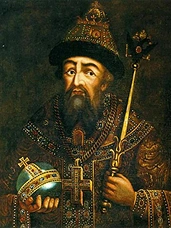
The source of power of the Russian emperors was also God — their link to the Roman-Byzantine dynasties was constructed over 300 years through a single successful marriage and a series of historical manipulations.
But what was the source of power for the Communists? As with Genghis Khan, its source was violence in the interests of a small ruling group — but ideologically, violence must be justified by something greater, otherwise such an imperium in the 20th century would be short-lived. Having renounced God, the Communists, in the spirit of the Enlightenment, proclaimed science as the foundation of their power — or rather, Marxist theory disguised as science.
Was violence and coercion justified here and now if humanity was to arrive at the Golden Age as a result? Utopians, including the Communists, answered this question affirmatively. But throughout human history, there have been several utopias, and yet the Golden Age never came. Therefore, to accept a utopia (and with it — violence and coercion), one had to be sure that the map guiding humanity toward the Golden Age was the correct one. In the positivist 19th century, the “correct” was equated with the “scientific” — hence so many attempts to squeeze various disciplines, from philosophy or economics to exotic psychoanalysis or anthroposophy, into the framework of scientific paradigms.
This is why it was critically important for the Communists to give Marxist theory — the source of their power — the status of scientific, true knowledge. Vladimir Lenin did this with the elegance of Genghis Khan, declaring: “Marx’s teaching is omnipotent because it is true.” Thus, whatever the Communists did, they had the right to do so, as they were practically implementing the postulates of Marxist science.
The idea of the future World Soviet Socialist Republic and its starting point — the Soviet Union — allowed Communist ideologists to leap over the ruinous idea of nation-states that emerged in Europe after World War I. Nation-states were to be replaced by an empire of a new type, one that denied even the word “empire” — a worldwide international of the working class.